
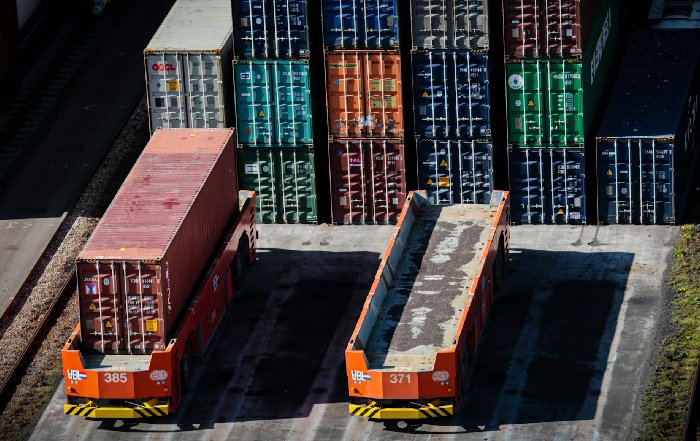
The Role of Edge Computing in Real-Time Logistics
Why Edge Computing Has Become Central to Modern Logistics
Real-time logistics has shifted from an operational aspiration to a competitive necessity, driven by rising customer expectations, increasingly complex global supply chains, and the explosive growth of connected devices across warehouses, vehicles, and last-mile delivery networks. In this environment, edge computing has moved from a niche technology to a foundational capability, enabling logistics organizations to process data closer to where it is generated, reduce latency, improve resilience, and orchestrate highly dynamic operations at scale. For the global executive audience of DailyBizTalk, which spans strategy, operations, technology, and finance leaders across regions from North America and Europe to Asia-Pacific and Africa, understanding the role of edge computing in real-time logistics is no longer a matter of technical curiosity; it is central to how they design future-ready supply chains, allocate capital, and manage risk.
Edge computing, broadly defined, refers to the deployment of computing resources and analytics capabilities near the point of data creation, such as in a warehouse, on a delivery vehicle, or at a port terminal, rather than relying solely on centralized cloud data centers. As organizations integrate sensors, cameras, autonomous systems, and connected assets across logistics networks, they generate vast volumes of data that are often time sensitive and mission critical. Latency, bandwidth constraints, and intermittent connectivity make it impractical to send all of this data to the cloud for processing. By executing analytics, decision logic, and machine learning inference at the edge, logistics operators can respond in milliseconds to changing conditions, while still synchronizing with cloud platforms for historical analysis, planning, and enterprise integration. This distributed architecture, when combined with robust strategy and disciplined management practices, is reshaping how logistics is planned, executed, and optimized.
Strategic Imperatives: Edge as an Enabler of Real-Time Supply Chains
From a strategic perspective, edge computing has become a lever for creating differentiated logistics capabilities that support broader business goals in growth, customer experience, and resilience. Senior executives designing supply chain and logistics strategies increasingly view edge-enabled real-time visibility as a prerequisite for advanced offerings such as guaranteed same-day delivery, dynamic slotting and routing, and outcome-based logistics contracts. As explored in greater depth in the strategy resources at DailyBizTalk's strategy section, the competitive landscape now rewards organizations that can transform logistics from a cost center into a source of customer value and strategic insight.
In markets such as the United States, Germany, the United Kingdom, and Singapore, where e-commerce penetration is high and customer expectations for speed and transparency are acute, leading logistics providers are embedding edge computing into their fulfillment centers and transportation networks to orchestrate inventory, labor, and assets in near real time. In emerging markets across Asia, Africa, and South America, where connectivity is often inconsistent, edge computing provides a way to maintain operational continuity in the face of network disruptions, supporting growth in cross-border trade and regional manufacturing hubs. For multinational organizations operating in complex regulatory environments, edge architectures also offer a path to comply with data localization and privacy requirements while still capturing the benefits of advanced analytics, an issue that intersects with governance topics covered in DailyBizTalk's compliance insights.
Strategically, edge computing should not be viewed as a standalone technology investment but as part of an integrated operating model that spans network design, inventory strategy, transportation planning, and customer promise management. The most advanced organizations use edge capabilities to feed high-quality, low-latency data into their demand forecasting, pricing, and capacity planning processes, enabling more precise decisions on where to hold inventory, how to structure contracts with carriers and 3PLs, and which service levels to commit to in different markets. Leaders who frame edge computing within a holistic supply chain strategy, rather than as an isolated IT initiative, are better positioned to capture its full value.
The Technology Foundation: From Sensors to Edge Platforms
At the technical level, edge computing in logistics sits at the intersection of Internet of Things (IoT), connectivity, and cloud-native software architectures. In a typical scenario, sensors and devices on conveyor belts, forklifts, pallets, trucks, and delivery robots generate continuous streams of data on location, temperature, vibration, inventory status, and equipment health. Video feeds from cameras in warehouses and loading docks are increasingly used to monitor safety, verify loading accuracy, and detect bottlenecks. Edge gateways and micro data centers aggregate this data, run analytics workloads, and interact with local control systems, while selectively synchronizing with cloud platforms for storage, model training, and cross-network optimization.
Major technology providers, including Microsoft, Amazon Web Services, and Google Cloud, have invested heavily in managed edge services and hybrid architectures that make it easier for logistics organizations to deploy and manage distributed applications. Learn more about how edge and cloud architectures are evolving in logistics by exploring resources from Microsoft Azure IoT or Amazon Web Services edge computing. Telecommunications providers across Europe, North America, and Asia, such as Verizon, Deutsche Telekom, and NTT, are complementing these platforms with 5G and private network offerings that provide the low-latency, high-reliability connectivity needed for mission-critical logistics operations, as described in industry analyses from the GSMA.
Edge platforms in logistics increasingly support containerized workloads, allowing organizations to deploy the same application logic across warehouses, vehicles, and terminals while tailoring configurations to local conditions. This cloud-native approach improves portability, resilience, and lifecycle management, enabling IT and operations teams to collaborate more effectively. As detailed in DailyBizTalk's technology coverage, the convergence of edge computing, AI, and 5G is creating a new digital infrastructure layer for logistics that is both more responsive and more complex to govern, requiring robust architecture principles, security controls, and operational discipline.
Real-Time Warehouse and Fulfillment Operations
In warehouses and fulfillment centers, edge computing is transforming how inventory is managed, orders are processed, and labor is orchestrated. Autonomous mobile robots, automated storage and retrieval systems, and smart conveyor networks rely on low-latency decision-making to route items, avoid collisions, and adapt to real-time demand. By processing sensor and location data locally, edge systems can coordinate hundreds or thousands of devices with millisecond-level responsiveness, something that would be difficult or impossible if every decision depended on round trips to a distant cloud.
Organizations such as DHL, UPS, and Amazon have been early adopters of robotics and automation in logistics, using edge-enabled systems to optimize picking routes, slotting strategies, and workload balancing in large facilities across the United States, Europe, and Asia-Pacific. Industry case studies, such as those published by the MIT Center for Transportation & Logistics, highlight how real-time warehouse control systems can increase throughput, reduce error rates, and improve labor productivity when combined with edge analytics and machine learning. These capabilities are particularly valuable in peak seasons, when volumes spike and service-level agreements are unforgiving.
For smaller and mid-sized logistics providers, edge computing is also becoming more accessible through modular solutions from industrial automation companies such as Siemens and Rockwell Automation, which provide edge-enabled controllers and analytics applications tailored to warehouse and distribution center environments. Learn more about industrial edge solutions for logistics operations from Siemens Industrial Edge. By deploying these systems, operators can implement real-time monitoring of equipment, predictive maintenance, and dynamic allocation of tasks to human workers and robots, improving both efficiency and safety.
Warehouse operations leaders who read DailyBizTalk's operations content are increasingly focused on integrating these edge capabilities with workforce management systems, labor standards, and performance metrics. The most effective implementations combine real-time data with clear operating procedures and frontline engagement, ensuring that supervisors and associates understand how edge-driven insights translate into day-to-day decisions on the floor.
Transportation, Fleet, and Last-Mile Optimization
Beyond the four walls of the warehouse, edge computing is reshaping how fleets are managed, routes are optimized, and last-mile deliveries are executed. Connected trucks, vans, and delivery robots act as mobile edge nodes, equipped with telematics, cameras, and sensors that monitor vehicle health, driver behavior, cargo conditions, and traffic patterns. By processing this data on board, vehicles can support advanced driver-assistance systems, dynamic routing, and proactive maintenance alerts even when connectivity to central systems is limited or intermittent.
Global fleet operators and logistics providers, including FedEx, Maersk, and DB Schenker, are using edge analytics to optimize fuel consumption, reduce emissions, and improve on-time performance across routes spanning North America, Europe, and Asia. Research from the International Transport Forum underscores how data-driven fleet management, enabled by edge and telematics, can contribute to both operational efficiency and environmental sustainability. For example, real-time aggregation of data from vehicles and roadside infrastructure can enable dynamic congestion avoidance, temperature-controlled cargo monitoring for pharmaceuticals and food, and automated proof of delivery.
In dense urban environments such as London, Singapore, and Seoul, last-mile operations are particularly sensitive to traffic conditions, local regulations, and customer availability. Edge-enabled route optimization systems can incorporate real-time data from vehicles, city sensors, and customer apps to adjust delivery sequences on the fly, reducing failed delivery attempts and improving utilization. Learn more about urban logistics and smart city initiatives supporting such capabilities from the World Economic Forum. For retailers and e-commerce platforms, these capabilities directly affect customer satisfaction, return rates, and the economics of same-day and next-day delivery offerings.
Executives responsible for logistics and transportation strategy are also linking edge-enabled fleet insights with broader financial and risk management considerations. By feeding high-granularity, real-time data into enterprise systems, organizations can improve cost allocation, contract management, and performance-based incentives, topics that intersect with DailyBizTalk's finance analysis and risk management coverage. As regulations related to emissions, road safety, and cross-border transport tighten across regions from the European Union to South Korea and Brazil, edge computing provides a way to monitor compliance and document performance in a defensible, auditable manner.
Data, AI, and Analytics at the Edge
The true power of edge computing in logistics is realized when it is combined with advanced data analytics and artificial intelligence. Rather than simply collecting data for offline analysis, organizations are deploying machine learning models directly on edge devices to detect anomalies, predict failures, and optimize operations in real time. For instance, computer vision models running on cameras in warehouses can detect unsafe behaviors, misloaded pallets, or blocked aisles, triggering immediate alerts to supervisors. Similarly, anomaly detection models on transportation assets can identify subtle changes in vibration or temperature that indicate impending mechanical issues, enabling maintenance to be scheduled before failures occur.
Leading research institutions and industry bodies, such as Gartner and McKinsey & Company, have documented how AI at the edge can significantly improve logistics performance, especially when integrated into broader digital supply chain transformations. Explore strategic perspectives on AI in supply chains from McKinsey's operations insights. However, deploying AI models at the edge introduces new challenges in model lifecycle management, version control, and governance, particularly when devices are distributed across multiple countries with varying regulatory regimes. Data leaders who follow DailyBizTalk's data-focused content are increasingly concerned with how to ensure data quality, model transparency, and ethical use of AI in operational contexts.
A hybrid architecture is emerging as a best practice, in which model training and experimentation occur in the cloud, where compute resources and historical data are abundant, while inference is deployed to edge nodes for low-latency decision-making. This requires robust pipelines for model deployment, monitoring, and rollback, as well as clear roles and responsibilities between data science, IT, and operations teams. Organizations that invest in these capabilities can move from reactive logistics management to predictive and prescriptive approaches, where the system not only alerts managers to issues but recommends and, in some cases, automatically executes corrective actions.
Leadership, Talent, and Organizational Change
The adoption of edge computing in real-time logistics is as much a leadership and talent challenge as it is a technology one. Senior leaders must articulate a clear vision for how edge capabilities will support business strategy, customer value propositions, and operational excellence, while also addressing concerns about job impacts, data privacy, and safety. As discussed in DailyBizTalk's leadership insights, effective leaders in this space blend technological literacy with deep operational understanding, enabling them to make informed trade-offs between automation, resilience, cost, and human factors.
From a talent perspective, logistics organizations across regions such as the United States, Canada, Germany, and Japan are competing for professionals who can bridge operations, data, and engineering. Roles such as edge platform engineer, industrial data scientist, and autonomous systems operator are becoming more common, and companies are investing in reskilling programs for existing staff. Insights on building such cross-functional careers can be found in DailyBizTalk's careers section. At the same time, frontline workers need training to interact with edge-enabled systems, interpret real-time alerts, and collaborate with autonomous equipment safely and effectively.
Change management is critical, particularly in large organizations with established processes and legacy systems. Leaders must ensure that edge initiatives do not become isolated pilots but are integrated into standard operating procedures, performance management frameworks, and governance structures. Clear communication about the purpose of edge deployments, the expected benefits, and the safeguards in place to protect workers and customers helps build trust and reduce resistance. Organizations that treat edge computing as a catalyst for broader cultural and process transformation, rather than a narrow technology upgrade, are more likely to achieve sustainable impact.
Risk, Security, and Regulatory Considerations
While edge computing offers significant benefits for real-time logistics, it also introduces new risk dimensions that must be managed proactively. Distributed architectures expand the attack surface, as each edge device becomes a potential entry point for cyber threats. Securing these devices, ensuring they are patched and monitored, and managing identities and access rights across thousands of nodes is a nontrivial challenge. Guidance from organizations such as the National Institute of Standards and Technology and the European Union Agency for Cybersecurity provides valuable frameworks for securing IoT and edge environments, but logistics leaders must adapt these to the specific realities of their operations.
Data privacy and sovereignty are also critical, particularly for organizations operating across jurisdictions with differing regulations, such as the General Data Protection Regulation in Europe, data localization laws in China, and sector-specific rules in industries like healthcare and pharmaceuticals. Edge computing can help by allowing sensitive data to be processed locally and only aggregated or anonymized data to be sent to central systems, but this requires careful design and transparent policies. Risk and compliance leaders who follow DailyBizTalk's risk management and compliance content are increasingly involved in edge initiatives from the outset, rather than being consulted only at later stages.
Operational risk must also be considered, including the possibility of edge device failures, software bugs, or unintended interactions between automated systems. Robust testing, redundancy, and fail-safe mechanisms are essential, especially when edge systems control physical equipment or influence safety-critical processes. Organizations should establish clear incident response procedures that span technology, operations, and communications, ensuring that they can respond quickly to disruptions while maintaining service levels and regulatory obligations. External benchmarks and best practices from bodies such as the World Bank's logistics performance reports can help organizations assess their risk posture relative to peers and identify areas for improvement.
Financial Impact, ROI, and Growth Opportunities
From a financial standpoint, investments in edge computing for real-time logistics must be evaluated not only on direct cost savings but also on their contribution to revenue growth, risk reduction, and strategic flexibility. Capital expenditures on edge infrastructure, sensors, and automation can be significant, particularly for large networks of warehouses and fleets, but the payback period can be compelling when improvements in throughput, labor productivity, fuel efficiency, and loss reduction are taken into account. Financial leaders exploring these trade-offs can find complementary perspectives in DailyBizTalk's growth-focused analysis and finance content.
Edge-enabled real-time logistics can unlock new revenue streams, such as premium delivery services, value-added tracking and monitoring offerings for high-value or sensitive goods, and performance-based logistics contracts where fees are tied to service-level adherence. In sectors such as pharmaceuticals, aerospace, and high-tech manufacturing, customers are willing to pay for greater visibility, reliability, and compliance assurance, and edge computing provides the data and responsiveness needed to deliver these services credibly. Insights from organizations like the World Trade Organization and the OECD suggest that as global trade patterns evolve, logistics providers that can offer differentiated, data-rich services will capture a disproportionate share of value.
Moreover, edge computing supports more agile expansion into new markets and business models. For example, logistics providers entering fast-growing e-commerce markets in Southeast Asia or Africa can deploy modular, edge-enabled micro-fulfillment centers and local fleets that operate reliably even with variable connectivity and infrastructure. This flexibility reduces the risk and lead time associated with large centralized investments, allowing organizations to test and scale new offerings more quickly. As global supply chains continue to reconfigure in response to geopolitical shifts, sustainability pressures, and technological change, edge computing becomes an important tool for maintaining optionality and resilience.
What's Ahead: The Future of Edge-Enabled Logistics
The trajectory of edge computing in logistics is clear: it is moving from early adoption to mainstream deployment, with increasing standardization of platforms, architectures, and best practices. However, the journey is far from complete. The next wave of innovation is likely to involve deeper integration between edge computing and emerging technologies such as digital twins, autonomous vehicles, and advanced robotics, enabling even more sophisticated real-time coordination across entire supply networks. Learn more about how digital twins are reshaping industrial operations from resources at Siemens and other industrial leaders.
For the global business audience of DailyBizTalk, the key question is not whether edge computing will shape the future of logistics, but how their organizations will participate in and benefit from this transformation. Executives must consider where edge capabilities can create the greatest strategic advantage, how to build the required technology and talent foundations, and how to manage the associated risks responsibly. They must also recognize that edge computing is not a one-time project but a continuous capability that will evolve as devices, networks, and applications advance.
Ultimately, the role of edge computing in real-time logistics is to enable supply chains that are not only faster and more efficient, but also more transparent, resilient, and responsive to the needs of customers, regulators, and societies across regions from North America and Europe to Asia-Pacific, Africa, and South America. Organizations that combine technological sophistication with strong leadership, disciplined management, and a commitment to trustworthiness will be best positioned to turn edge-enabled logistics into a durable source of competitive advantage. For ongoing analysis of how these trends intersect with strategy, technology, operations, and risk, readers can continue to explore insights across DailyBizTalk at dailybiztalk.com.
