
How to Improve Supplier Performance Without Raising Costs
Improving supplier performance without inflating costs has become one of the defining strategic challenges for leaders who manage complex value chains. As supply networks have grown more global, digital, and interdependent, executives have discovered that the traditional tools of supplier management - price squeezing, adversarial negotiations, and periodic scorecards - are no longer enough to deliver resilience, quality, and innovation at the same time. For fab folks of DailyBizTalk, this question sits at the intersection of strategy, leadership, operations, finance, and technology, and it demands a disciplined, data-informed, and collaborative approach.
This article explores how organizations across North America, Europe, Asia-Pacific, and beyond are improving supplier performance while holding, and in some cases reducing, total cost. It focuses on practical levers that executives and managers can apply immediately, grounded in research from respected institutions, real-world case patterns, and the evolving best practices of high-performing procurement and supply chain teams.
Rethinking "Cost" and "Performance" in the Modern Supply Network
Many organizations still treat supplier performance and cost as opposing forces. Procurement teams are often measured on unit price reductions, while operations and quality leaders are judged on uptime, defect rates, and customer satisfaction. This internal misalignment can drive short-term savings that erode long-term value, particularly when suppliers respond to price pressure by cutting corners on quality, service, or innovation.
Leading organizations are reframing the discussion around total value and total cost of ownership. Instead of focusing narrowly on invoice prices, they examine the full economic impact of supplier performance, including quality failures, logistics disruptions, excess inventory, and administrative overhead. Research by McKinsey & Company has highlighted how companies that integrate end-to-end supply chain visibility with advanced analytics often uncover hidden cost drivers in areas such as expediting fees, scrap, and rework, and then work with suppliers to eliminate them rather than simply pushing for lower prices. Readers can explore how this connects to broader corporate strategy in the DailyBizTalk section on strategy and competitive positioning.
At the same time, the definition of supplier performance has expanded. Beyond traditional metrics like on-time delivery and defect rates, organizations now evaluate suppliers on resilience, cybersecurity posture, sustainability, and innovation capability. The World Economic Forum and other global bodies have emphasized that supply chain resilience and responsible sourcing are now board-level concerns, with regulators, investors, and customers increasingly scrutinizing how companies manage their upstream partners. Improving supplier performance without raising costs therefore requires aligning internal incentives, expanding the performance lens, and recognizing that collaboration often yields more durable gains than confrontation.
Building a Performance-Driven Supplier Strategy
A structured supplier strategy is the foundation for improving performance at constant or lower cost. Without clarity on which suppliers matter most, what success looks like, and how relationships should be governed, organizations often resort to reactive firefighting and transactional negotiations.
High-performing companies typically segment their supply base according to strategic importance, risk, and spend. Critical suppliers that affect customer experience, regulatory compliance, or brand reputation receive more intensive management and collaboration, while low-risk, commoditized suppliers may be managed through standardized contracts and digital marketplaces. Guidance from Gartner and Deloitte has emphasized that supplier segmentation enables organizations to focus scarce relationship-management resources where they deliver the greatest value.
For readers of DailyBizTalk, this segmentation approach connects closely to effective management practices. Executives can define clear performance objectives for each segment, such as innovation targets for strategic partners or strict service-level adherence for logistics providers, and then tailor governance mechanisms accordingly. Importantly, this does not require higher prices; it requires sharper prioritization and a more deliberate allocation of attention.
Strategic clarity also supports better internal alignment. When finance, operations, procurement, and commercial teams agree on which suppliers are most critical and why, they can jointly design incentives and review processes that reward long-term performance rather than short-term savings. This cross-functional approach is increasingly recommended by institutions such as the Institute for Supply Management (ISM) in the United States and similar professional bodies in Europe and Asia, which emphasize that supplier performance is a core element of enterprise strategy, not merely a procurement concern.
Using Data and Analytics to Target the Right Improvements
Improving supplier performance without raising costs depends heavily on the intelligent use of data. Many organizations already collect large volumes of information on deliveries, quality issues, and service incidents, but they often lack the integrated view needed to translate this data into actionable insights. Fragmented systems, inconsistent definitions, and manual reporting can obscure root causes and lead to misguided interventions.
Forward-looking companies are investing in integrated data platforms and analytics tools that consolidate supplier performance metrics across functions and regions. By linking procurement data with operational, quality, and financial information, they can calculate the true cost of poor performance and identify where targeted improvements will yield the highest returns. Resources such as Supply Chain Management Review and APICS (now part of ASCM, the Association for Supply Chain Management) provide case-based insights into how organizations have used such analytics to reduce disruptions and improve quality without increasing supplier prices.
From a DailyBizTalk perspective, this is where data and analytics capabilities become a strategic asset. Organizations that build robust data governance, standardize performance metrics, and deploy dashboards accessible to both internal stakeholders and key suppliers can move from reactive issue resolution to proactive performance management. For example, by identifying recurring defects associated with a specific process at a supplier's facility, a manufacturer can propose a joint improvement project that reduces scrap and rework for both parties, delivering cost savings that more than offset the investment of time and expertise.
Advanced analytics, including machine learning, are increasingly used to predict supplier risks and performance issues before they materialize. Research and guidance from MIT Center for Transportation & Logistics and Harvard Business Review have highlighted how predictive models based on historical performance, geopolitical data, and logistics information can flag emerging problems, allowing companies to work with suppliers on corrective actions at lower cost than emergency interventions. While not every organization needs cutting-edge AI tools, even relatively simple trend analyses and root-cause studies can generate meaningful performance gains.
Strengthening Relationships and Governance Without Paying More
Contrary to the belief that deeper supplier relationships necessarily require higher prices, many organizations have demonstrated that structured, trust-based collaboration can improve performance while stabilizing or even reducing total cost. The key lies in thoughtful governance, transparent communication, and mutual benefit.
Formal supplier relationship management (SRM) programs provide a framework for this collaboration. These programs typically involve regular performance reviews, joint planning sessions, and clear escalation paths for resolving issues. Publicly available guidance from organizations such as CIPS (the Chartered Institute of Procurement & Supply) in the United Kingdom describes how SRM can enhance reliability and innovation without compromising commercial discipline.
For companies that rely on global supply networks across North America, Europe, and Asia, formal governance becomes even more important. Time zone differences, cultural nuances, and regulatory complexities can create misunderstandings that degrade performance. A structured cadence of meetings, shared dashboards, and agreed key performance indicators helps ensure that both sides maintain a common understanding of expectations. Readers can connect these practices to broader leadership principles, as effective SRM requires leaders who can balance firmness with partnership and who understand that respect and clarity often cost nothing but deliver significant returns.
Importantly, strong governance does not mean micromanagement. Suppliers are more likely to invest in performance improvements when they perceive a stable, fair, and long-term relationship. Studies and case examples highlighted by PwC and KPMG show that suppliers often volunteer process enhancements, technology upgrades, or quality initiatives when they trust that customers will not immediately demand price concessions that capture all the benefits. In this way, improved performance emerges from a shared commitment to value creation rather than unilateral demands.
Leveraging Process Excellence and Lean Principles Across the Supply Base
Many of the most impactful performance improvements are found not in renegotiated contracts but in the elimination of waste across shared processes. Lean and Six Sigma methodologies, originally developed in manufacturing contexts, have been widely applied to supplier collaboration, enabling both parties to reduce defects, delays, and unnecessary complexity.
Organizations that apply continuous improvement principles to their supply relationships typically begin by mapping end-to-end processes, from order placement to final delivery and invoicing. This exercise often reveals redundant approvals, manual data entry, inconsistent labeling, or poorly aligned batch sizes that create avoidable costs and errors. By co-designing streamlined workflows with suppliers, companies can often achieve better on-time performance, lower defect rates, and faster cycle times without any increase in unit prices. Resources from Lean Enterprise Institute and American Society for Quality (ASQ) provide detailed guidance on applying lean tools in supplier contexts.
For readers of DailyBizTalk, this approach sits squarely within the domain of operations excellence. Leadership teams that embed lean thinking into their procurement and supplier management processes can unlock substantial value. For instance, by standardizing packaging and labeling requirements across multiple suppliers, a retailer can reduce receiving errors and labor costs in distribution centers, while suppliers benefit from simpler production and logistics processes.
Joint Kaizen events, where cross-functional teams from both customer and supplier organizations collaborate to identify and eliminate waste, are increasingly used in industries ranging from automotive to consumer goods. These initiatives typically require time and openness rather than budgetary outlays, and they can generate measurable improvements in performance that benefit both sides. The emphasis on shared problem-solving reinforces trust and demonstrates that performance improvement is a collaborative endeavor, not a unilateral demand.
Digital Tools that Enhance Supplier Performance Without Extra Spend
Digitalization has transformed how organizations interact with suppliers, and many of the most valuable tools do not require significant capital investments. Cloud-based procurement platforms, supplier portals, and collaborative planning tools can streamline communication, reduce errors, and provide real-time visibility into orders and inventory levels.
Research and case studies from Accenture and Capgemini illustrate how organizations using digital procurement solutions often experience better compliance with contracts, fewer invoice disputes, and improved on-time delivery, all of which contribute to higher supplier performance at stable or lower cost. These platforms enable standardized processes for purchase orders, confirmations, and change requests, reducing the administrative burden on both sides and minimizing misunderstandings that can lead to delays or quality issues.
From a DailyBizTalk standpoint, digital supplier tools align with broader themes in technology-driven transformation. Even relatively simple measures, such as implementing electronic data interchange (EDI) for order transmission or using shared forecasting spreadsheets, can materially improve performance. More advanced organizations are experimenting with blockchain-based traceability, IoT-enabled condition monitoring for sensitive shipments, and AI-driven demand forecasting that feeds directly into supplier production plans. Guidance from World Bank and OECD has highlighted how digital trade facilitation measures and interoperable data standards can reduce friction in global supply chains, benefiting both large enterprises and small and medium-sized suppliers.
Importantly, many digital tools are now available as subscription services or modular add-ons, reducing the need for large upfront investment. By carefully selecting solutions that address specific pain points - such as frequent order errors, poor visibility into shipment status, or slow approval cycles - organizations can improve supplier performance through better information flow and process discipline rather than higher prices.
Aligning Incentives and Contracts with Performance Goals
Contracts and incentives play a critical role in shaping supplier behavior. Traditional contracts that focus primarily on unit price, payment terms, and basic service levels may unintentionally discourage investment in performance improvements, especially when suppliers fear that any gains will simply trigger demands for further price reductions.
Progressive organizations are experimenting with performance-based contracts and gainsharing models that explicitly reward suppliers for achieving jointly agreed improvements in quality, delivery, or cost efficiency. For example, a logistics provider might receive a share of the savings generated by reducing damage rates or optimizing route planning, while a component supplier could benefit from a bonus tied to reduced defect rates and faster changeover times. Guidance from International Association for Contract and Commercial Management (IACCM), now known as World Commerce & Contracting, provides frameworks for designing such agreements in a fair and transparent manner.
This approach resonates with the DailyBizTalk focus on finance and value creation. Rather than treating suppliers as fixed-cost inputs, organizations view them as partners in continuous improvement and risk reduction. Well-designed incentives do not necessarily raise base prices; instead, they create optional upside for suppliers who deliver measurable value beyond contractual minimums. Over time, this arrangement can reduce total cost of ownership, even if nominal unit prices remain unchanged or only modestly adjusted.
Risk-sharing is another important dimension. As regulatory requirements and geopolitical uncertainties increase, suppliers may be hesitant to invest in resilience measures such as dual sourcing of critical materials or enhanced cybersecurity unless customers share some of the burden. Collaborative risk management frameworks, aligned with guidance from entities such as ISO (particularly ISO 28000 for supply chain security) and national cybersecurity agencies, can help structure these arrangements in a way that protects both parties without inflating costs unnecessarily. Readers interested in this dimension can explore DailyBizTalk's coverage of risk management and compliance and compliance frameworks.
Developing Supplier Capabilities and Innovation Potential
Improving supplier performance is not only about enforcing standards; it is also about helping suppliers build the capabilities needed to meet evolving expectations. Many leading organizations now view supplier development as a strategic investment rather than an optional extra, recognizing that the capabilities of their supply base directly influence their own competitiveness and resilience.
Supplier development can take many forms, from training sessions on quality management and regulatory compliance to technical support in process optimization or digitalization. Programs documented by bodies such as UNIDO (United Nations Industrial Development Organization) and national industry associations in Germany, Japan, and South Korea show that structured supplier development initiatives often lead to lower defect rates, faster innovation cycles, and greater supply stability, without necessarily increasing prices. Instead, suppliers become more efficient and capable, allowing them to maintain or even reduce pricing while improving performance.
For DailyBizTalk readers, this intersects with themes of innovation and growth. Companies that cultivate innovation ecosystems with their suppliers often co-create new products, materials, or service models that differentiate them in the market. These collaborations can include joint research projects, co-located engineering teams, or shared pilot facilities. While such initiatives require time and openness, they do not always demand large cash outlays, particularly when both parties see clear commercial potential.
Capability-building efforts also support sustainability and ESG goals. Guidance from United Nations Global Compact and CDP (formerly Carbon Disclosure Project) emphasizes that many environmental and social impacts occur in supply chains rather than within a company's direct operations. By helping suppliers improve energy efficiency, reduce waste, or strengthen labor practices, organizations can enhance both performance and compliance with emerging regulations, such as due diligence laws in Europe, without simply passing costs downstream. Over time, these improvements can lower operational expenses for suppliers, creating space for competitive pricing and stable relationships.
Embedding Supplier Performance in Organizational Culture and Talent
Sustainable improvement in supplier performance depends not only on processes and technology but also on people and culture. Organizations that consistently achieve high performance from their suppliers tend to treat procurement and supply chain roles as strategic functions, investing in skills such as negotiation, data analysis, stakeholder management, and cross-cultural communication.
Professional development opportunities, including certifications from bodies like ISM, CIPS, and ASCM, help build the expertise needed to manage complex supplier relationships across regions such as the United States, United Kingdom, Germany, China, and Singapore. For readers interested in the career dimension, DailyBizTalk's focus on careers and talent development offers additional perspectives on how procurement and supply chain professionals can position themselves as strategic partners within their organizations.
Culturally, organizations that view suppliers as extensions of their own enterprise, rather than as adversaries, are more likely to unlock performance improvements without higher costs. This mindset encourages transparency about demand forecasts, early involvement of suppliers in product design, and open discussion of constraints and risks. Case-based insights from Harvard Business School and INSEAD suggest that when internal teams are incentivized to consider total value rather than only immediate budget impacts, they make decisions that support healthier supplier relationships and better long-term performance.
Internal collaboration is crucial. If engineering changes are communicated late, finance enforces rigid payment terms without regard to supplier cash flow, or sales teams promise unrealistic lead times, supplier performance will suffer regardless of contractual penalties. Cross-functional governance structures, such as supply councils or integrated business planning forums, can align decisions across departments and ensure that supplier performance considerations are embedded in product, pricing, and service strategies.
Moving from Cost Pressure to Shared Value
In many industries, the temptation to pursue short-term cost reductions at the expense of supplier health remains strong. However, recent disruptions - from pandemics and geopolitical tensions to climate-related events and cyber incidents - have underscored the fragility of extended supply networks and the high price of brittle relationships. Organizations that relied solely on aggressive cost-cutting have often found themselves exposed when key suppliers struggled to deliver.
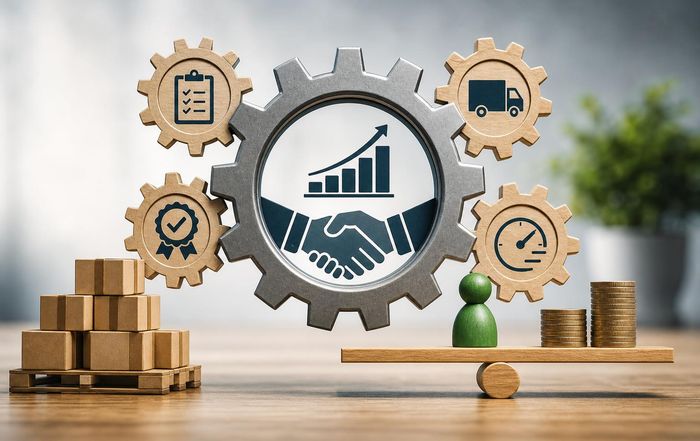
A more resilient and value-focused approach does not abandon cost discipline; rather, it recognizes that the most sustainable path to lower total cost lies in better performance, reduced waste, and stronger collaboration. By combining rigorous data analysis, thoughtful segmentation, lean process improvements, digital tools, performance-based incentives, capability-building, and a culture of partnership, companies can systematically improve supplier performance without raising costs.
For community members of DailyBizTalk, this represents an opportunity to reframe how their organizations think about suppliers, not as distant vendors but as integral partners in strategy, innovation, and risk management. As global supply chains continue to evolve in the years ahead, those enterprises that master this shift will be better positioned to deliver reliable, high-quality, and responsible products and services to their customers, while maintaining the financial discipline that shareholders and stakeholders expect.
