
Data Visualization for Board Presentations in 2026: Turning Numbers into Decisions
Why Data Visualization Has Become Mission-Critical for Boards
By 2026, boardrooms across North America, Europe, and Asia have become increasingly data-saturated environments in which directors are expected to navigate complex economic conditions, heightened regulatory scrutiny, and accelerating technological change while still making fast, high-stakes decisions. In this context, the ability to transform dense data into clear, visual narratives has moved from being a desirable communication skill to a core leadership capability. For readers of DailyBizTalk, whose interests span strategy, leadership, finance, technology, and risk, data visualization for board presentations now sits at the intersection of all these domains, shaping how senior decision-makers understand their organizations and the world around them.
Boards in the United States, United Kingdom, Germany, and other major markets are increasingly composed of directors with diverse backgrounds, including digital, sustainability, and cybersecurity expertise, yet they typically meet only a limited number of times per year and must absorb large volumes of information in compressed timeframes. Effective visualization allows chief executives, CFOs, and other C-suite leaders to distill complex datasets into a few decisive insights, enabling boards to interrogate assumptions, explore scenarios, and align on strategic direction. As DailyBizTalk regularly emphasizes in its coverage of strategy and management, the organizations that excel at data storytelling are increasingly the ones that secure board trust, accelerate decision cycles, and maintain strategic coherence in volatile markets.
The Strategic Role of Data Visualization in the Boardroom
Data visualization for boards is not about aesthetic dashboards or colorful slideware; it is fundamentally about strategic clarity. Directors in large enterprises and mid-market companies alike are now accustomed to seeing structured visuals that connect operational metrics to strategic outcomes, such as how shifts in customer behavior affect long-term value creation, or how capital allocation decisions influence risk-adjusted returns over multi-year horizons. Resources such as the Harvard Business Review have repeatedly shown how visual framing can change executive perceptions of risk and opportunity, and leaders who understand this dynamic are using visualization as a deliberate tool to guide board focus and shape strategic debate. Learn more about using data to drive strategy.
In global boardrooms, especially in regions like Europe and Asia where regulatory and stakeholder expectations are evolving rapidly, visual analytics are also being used to bridge cultural and functional differences among directors. For example, a non-executive director with a legal background in France may interpret risk differently from a technology-oriented director in Singapore; well-designed charts, scenario maps, and risk heatmaps create a shared language that reduces ambiguity. Organizations drawing on guidance from institutions such as the OECD and World Economic Forum are increasingly embedding key performance indicators for sustainability, digital transformation, and human capital into integrated visual scorecards that boards can review at every meeting, rather than relying solely on narrative reports. Learn more about sustainable business practices.
What Boards Actually Need to See: From Raw Metrics to Executive-Level Views
Boards do not need to see every metric; they need to see the right metrics, presented in the right way. Across industries from financial services in Switzerland to manufacturing in Germany and technology in the United States, leading organizations are converging on a layered approach to board-level visualization. At the top level, directors are presented with a concise set of visual indicators that track performance against strategic goals, such as revenue growth, margin trends, free cash flow, and return on invested capital, often benchmarked against peers using sources such as S&P Global or MSCI. Learn more about benchmarking and financial metrics.
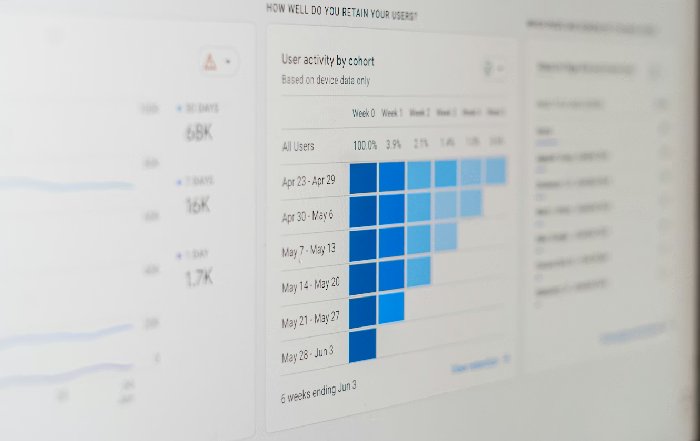
Below this top layer, boards expect to see targeted visual deep dives that illuminate the drivers behind those indicators. For example, a revenue bridge chart may show how growth in Asia-Pacific offsets softness in Europe, while a cohort analysis of customers in the United Kingdom or Canada may reveal how retention patterns differ by product line. In a risk context, directors are increasingly asking for scenario-based visualizations, such as stress tests that display how interest rate shifts or supply chain disruptions could impact liquidity or earnings, drawing on methodologies from organizations like the Bank for International Settlements or IMF. Learn more about scenario planning and macroeconomic risk.
The most effective board presentations avoid overwhelming directors with operational detail while still making it possible to drill down when necessary. Visuals must be designed so that a director can grasp the headline message in seconds, then explore the supporting evidence as discussion unfolds. This layered, executive-level view aligns closely with the themes explored on DailyBizTalk in areas such as operations and risk, where the challenge is to connect granular data with enterprise-level decisions.
Principles of Effective Board-Level Data Visualization
While visualization techniques continue to evolve, several enduring principles define effective board-level communication. First, clarity must take precedence over complexity; directors should never need to infer what a chart is meant to convey. Titles should state the conclusion rather than merely describe the content, axes should be clearly labeled, and color use should be restrained and consistent, following best practices articulated by experts such as Edward Tufte and the Nielsen Norman Group. Learn more about visual clarity and human-centered design.
Second, every visual element must have a purpose that directly supports a strategic question. In a board setting, charts that merely "show the data" without answering a decision-relevant question dilute attention and create cognitive noise. For instance, if the board is considering a major technology investment, a single, well-constructed chart that compares total cost of ownership and projected productivity gains across different scenarios will be more valuable than a dozen graphs showing historical IT spending without context. The editorial discipline that DailyBizTalk applies to its technology and innovation coverage offers a useful analogy: every graphic must earn its place by advancing understanding.
Third, consistency across reporting periods is essential for building board trust and enabling pattern recognition over time. Leading organizations in the United States, United Kingdom, and Australia are standardizing their board reporting templates so that key visuals, such as risk heatmaps or capital allocation waterfalls, maintain a stable structure across quarters and years. This allows directors to quickly detect deviations and trends without having to relearn the visual language at each meeting. Institutions like the CFA Institute and IFRS Foundation have long emphasized comparability in financial reporting, and this principle now extends to non-financial and operational visuals as well. Learn more about consistent and comparable reporting.
Choosing the Right Chart for the Boardroom Question
The choice of visualization type can materially influence how boards interpret information, especially when decisions involve trade-offs between growth, profitability, and risk. Line charts remain the most effective way to show trends over time, such as multi-year revenue trajectories across regions like North America, Europe, and Asia-Pacific, particularly when the board is focused on questions of momentum and inflection points. Bar charts are generally preferable for comparing discrete categories, such as product profitability by country, allowing directors to see relative performance at a glance. Organizations that follow guidance from analytics leaders such as Tableau and Microsoft Power BI are increasingly codifying internal standards that map common board questions to recommended chart types. Learn more about best practices in business analytics.
For more complex relationships, scatter plots and bubble charts can be particularly powerful when used sparingly and explained clearly. For example, a scatter plot mapping customer lifetime value against acquisition cost by market (United States, Germany, Japan, Brazil, and so forth) can reveal where growth is most value-accretive, while a bubble chart might add a third dimension such as churn risk or regulatory exposure. Heatmaps are proving useful in risk and compliance discussions, especially in sectors like financial services, healthcare, and energy, where boards must weigh the likelihood and impact of diverse risk categories. Institutions such as COSO and ISO provide frameworks that can be translated into visual matrices, enabling directors to see where risk concentrations are emerging and where mitigation efforts should be prioritized. Learn more about enterprise risk visualization.
When presenting forecasts or scenarios, waterfall charts and funnel visuals help boards understand how different drivers contribute to an outcome. A waterfall chart showing the bridge from current earnings to projected earnings under different macroeconomic scenarios, drawing on assumptions from sources like the World Bank or OECD, can make otherwise abstract forecasts tangible. However, in every case, the presenter's responsibility is to ensure that directors understand the logic behind the visualization, including any simplifying assumptions and limitations.
Data Storytelling: From Charts to Boardroom Narratives
Data visualization alone does not persuade a board; what influences decisions is the narrative that connects data to strategy, risk, and execution. Data storytelling in the board context involves crafting a coherent, evidence-based storyline that leads directors from context to insight to decision, using visuals as supporting actors rather than as the main event. This approach aligns with the editorial philosophy of DailyBizTalk, where complex topics in growth and marketing are framed as narratives that connect market dynamics, organizational capabilities, and measurable outcomes.
Effective board presenters begin by framing the strategic question the board must address, such as whether to enter a new market, approve a major acquisition, or pivot a product portfolio in response to technological disruption. They then introduce a small number of carefully designed visuals that progressively narrow the field of options, highlight trade-offs, and surface key uncertainties. Storytelling techniques, such as contrast (before vs. after), tension (risk vs. reward), and resolution (recommended course of action), are used to structure the flow of visuals in a way that mirrors how directors naturally think about decisions. Research from organizations like McKinsey & Company and Bain & Company has shown that executive audiences retain insights more effectively when data is embedded in narrative form rather than presented as isolated charts. Learn more about executive storytelling with data.
In global boardrooms, where directors may span multiple geographies and cultures, storytelling also plays a critical role in contextualizing data. For instance, a downturn in sales in Italy or Spain may carry very different strategic implications than a similar decline in South Korea or Singapore, depending on market maturity, competitive intensity, and regulatory conditions. Visuals that incorporate regional benchmarks, industry indices, or macroeconomic indicators from sources such as Eurostat or OECD help directors interpret numbers in light of local realities. The most trusted presenters are those who can weave these contextual elements into a narrative that is both analytically rigorous and strategically grounded.
Technology Platforms and Tools Shaping Board Reporting in 2026
By 2026, the technology landscape for board reporting has matured significantly, with many organizations moving beyond static slide decks toward integrated, secure digital board portals and analytics platforms. Vendors such as Diligent, Boardvantage, and Nasdaq Boardvantage have expanded capabilities to support interactive dashboards, scenario exploration, and real-time data refreshes, while still maintaining the governance and security features required by boards in regulated industries and jurisdictions like the United States, United Kingdom, and Singapore. Learn more about modern board governance technology.
At the same time, mainstream analytics platforms such as Microsoft Power BI, Tableau, and Qlik are increasingly being integrated directly into board reporting workflows, enabling finance, risk, and strategy teams to build standardized visual templates that pull from a single source of truth. This reduces the risk of version conflicts and manual errors that have historically undermined board confidence in data. In many organizations, chief data officers and heads of business intelligence are working alongside corporate secretaries and investor relations teams to define which datasets and visualizations are "board-ready," applying principles consistent with those discussed in DailyBizTalk coverage of productivity and operations.
Artificial intelligence and machine learning are also beginning to influence board-level visualization, not by replacing human judgment but by augmenting it. Advanced analytics tools can now automatically surface anomalies, cluster patterns, or generate scenario simulations that are then translated into visual formats for board review. Organizations exploring AI-driven analytics often refer to guidance from bodies like the World Economic Forum and OECD on responsible AI use, emphasizing transparency and explainability. Learn more about responsible AI in decision-making.
Governance, Compliance, and Risk: Visualizing What Matters
Boards bear ultimate responsibility for overseeing risk, compliance, and long-term resilience, and visualization has become central to how they discharge these duties. Risk committees in banks, insurers, and multinational corporations in regions such as Europe, North America, and Asia are now accustomed to reviewing integrated risk dashboards that visually map exposures across credit, market, operational, cyber, and ESG dimensions. These dashboards often align with frameworks from organizations like COSO, ISO, and sectoral regulators such as the European Central Bank or Federal Reserve, and they are designed to highlight concentrations, correlations, and emerging trends that might not be apparent in textual reports. Learn more about governance and compliance visualization.
In cyber and technology risk, where boards have historically struggled with technical complexity, visualization plays a particularly important role. Heatmaps, attack surface diagrams, and incident timelines help directors understand the organization's exposure and the effectiveness of controls without requiring deep technical expertise. Guidance from bodies like ENISA in Europe and NIST in the United States has encouraged boards to seek clear, visual reporting on cyber posture, including metrics such as patching cadence, phishing resilience, and third-party risk. Learn more about cybersecurity risk management.
ESG and sustainability reporting have also become highly visual domains, driven in part by regulatory developments in the European Union, United Kingdom, and other jurisdictions, as well as investor expectations worldwide. Boards are increasingly reviewing visual scorecards that track emissions, diversity metrics, supply chain resilience, and community impact, often aligned with standards from the Global Reporting Initiative (GRI), SASB, or the Task Force on Climate-related Financial Disclosures (TCFD). These visuals help directors see how sustainability performance intersects with strategy, brand, and long-term value creation. Learn more about integrated ESG reporting practices.
Building Organizational Capability and Trust in Board-Level Data
The quality of board-level visualization ultimately depends on the underlying data governance, analytical capabilities, and organizational culture. Boards in leading organizations are increasingly asking management to demonstrate not only the conclusions in their visuals but also the robustness of the data and models that support them. This has elevated the importance of roles such as chief data officer and chief analytics officer, particularly in data-intensive sectors and markets like the United States, Germany, and Singapore, where regulatory expectations around data integrity and privacy are high. Learn more about building data-driven organizations.
To build trust, organizations are investing in clear data lineage, standardized definitions of key metrics, and robust controls over how data is extracted, transformed, and visualized for board consumption. Frameworks from organizations such as DAMA International and EDM Council provide guidance on data management best practices, while regulators and standard setters like IOSCO and Basel Committee continue to emphasize data quality in risk and financial reporting. Training programs for executives and board liaisons increasingly include modules on data literacy and visualization, ensuring that those preparing board materials understand both the technical and governance dimensions of their work. Learn more about data governance foundations.
Culturally, organizations that excel in board-level visualization tend to foster open dialogue about assumptions, limitations, and uncertainties. Presenters are encouraged to be transparent about where data is incomplete or where models are sensitive to certain variables, using visuals to highlight confidence intervals or scenario ranges rather than presenting a single deterministic view. This aligns with the emphasis on transparency and trust that runs through DailyBizTalk coverage of leadership and careers, where credibility is seen as a long-term asset that must be earned through consistent, honest communication.
Preparing Executives and Boards for the Next Era of Visual Decision-Making
Looking ahead, data visualization for board presentations will continue to evolve as technologies advance, regulatory expectations grow, and boards themselves become more digitally fluent. Directors in markets from Canada and Australia to South Africa and Brazil are increasingly comfortable engaging with interactive dashboards and scenario tools, and younger cohorts of board members bring with them expectations shaped by years of using sophisticated analytics in operational roles. For organizations that wish to remain competitive, this means investing not only in tools but also in the skills and processes that translate data into board-ready insights.
Executives who regularly present to boards will need to deepen their understanding of visualization principles, narrative techniques, and cross-cultural communication, particularly in multinational groups. They will also need to collaborate closely with finance, risk, technology, and data teams to ensure that board materials reflect a coherent, enterprise-wide view of performance and risk. As DailyBizTalk continues to cover developments in economy, finance, and strategy, data visualization will remain a recurring theme, because it sits at the heart of how modern boards understand their world and make decisions.
For organizations operating in an increasingly uncertain global environment, the boards that can see most clearly-through precise, honest, and strategically aligned visualization-will be the ones best positioned to navigate volatility, seize opportunities, and sustain trust with stakeholders. Data visualization for board presentations, once a niche skill of analytically minded executives, has become in 2026 a foundational capability for governance, one that every serious business leader and board director must now master.
